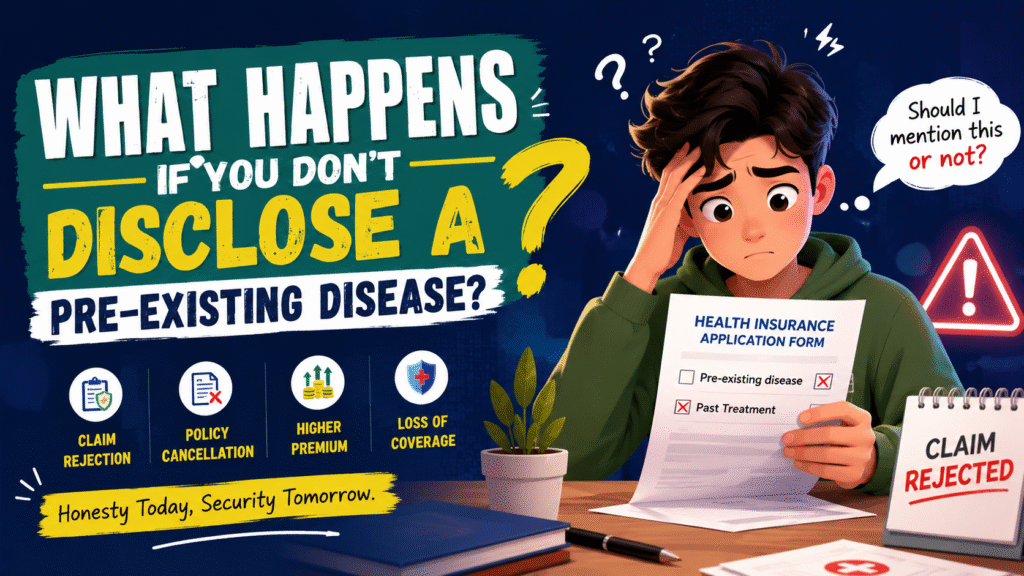
Buying health insurance is about preparing for the unexpected. But while filling out a health insurance proposal form, many people hesitate to mention an old illness, ongoing medication, or previous diagnosis. Sometimes they think, “It’s not serious anymore,” while others worry that disclosing it could increase their premium or lead to restrictions.
But hiding relevant medical information can create bigger problems later. What happens if you don’t disclose a pre-existing disease? The consequences can range from claim complications to policy-related disputes, depending on the circumstances, the policy terms, and whether the non-disclosure is considered material or deliberate.
The safest approach is simple: be honest and provide complete medical information when purchasing health insurance. Insurers assess the information provided while underwriting the policy, so accurate disclosure helps create a clearer understanding of what is and isn’t covered.
What Is a Pre-Existing Disease in Health Insurance?
A pre-existing disease, commonly referred to as a PED, generally means a medical condition that existed before the commencement of a health insurance policy, subject to the definition and applicable time period specified in the policy and regulatory framework.
Common examples may include:
- Diabetes
- Hypertension
- Asthma
- Thyroid disorders
- Heart-related conditions
- Previous surgeries
- Certain chronic illnesses
- Conditions for which a person has already received treatment or medical advice
Not every health issue automatically means that your claim will be rejected. Health insurance policies may provide coverage for pre-existing conditions after an applicable waiting period, depending on the plan.
This is why it is important to disclose your medical history rather than trying to guess what the insurer may consider important.
What Happens If You Don’t Disclose a Pre-Existing Disease?
The impact of non-disclosure depends on the nature of the information, the policy wording, the circumstances of the claim, and whether the insurer establishes that a material fact was deliberately concealed.
Here are some possible consequences.
1. Your Health Insurance Claim May Face Scrutiny
Imagine that you purchased health insurance without mentioning your existing diabetes. A few months later, you are hospitalized for a medical complication.
During claim assessment, the insurer may review available medical records, consultation history, prescriptions, diagnostic reports, and hospital documents.
If the insurer discovers that the condition existed before the policy began and was not disclosed, the claim may come under scrutiny.
This doesn’t mean every claim involving an undisclosed condition is automatically rejected. The exact outcome depends on the facts and the policy terms.
2. Your Claim Could Be Rejected in Certain Circumstances
One of the biggest concerns is claim rejection.
If an insurer determines that a material medical fact was deliberately withheld and that the non-disclosure affects the underwriting or claim, it may take action according to the policy terms and applicable regulations.
This is particularly important when the undisclosed condition is directly connected to the hospitalization for which the claim is being made.
For example, suppose someone already knows that they have a serious cardiac condition but does not disclose it while purchasing a policy. Later, they require hospitalization related to that condition. The insurer may investigate the circumstances and medical history before deciding the claim.
The lesson is straightforward: never assume that hiding a condition will make it disappear from your insurance record.
3. Policy Continuity Can Become a Concern
Another important issue is the policy itself.
Depending on the circumstances and applicable policy provisions, material misrepresentation or deliberate non-disclosure can create problems beyond a single claim.
That is why the proposal form should be completed carefully. If you’re unsure whether a particular medical condition, test, surgery, or medication needs to be mentioned, it is generally better to disclose it and allow the insurer to assess its relevance.
IRDAI-regulated health insurance products operate under specific regulatory and policy requirements, while individual policy documents contain their own definitions, exclusions, waiting periods and claim conditions.
Why Do People Hide Pre-Existing Diseases?
Usually, non-disclosure doesn’t happen because someone wants to commit fraud. Sometimes people simply don’t understand how health insurance works.
Here are some common reasons:
“I Don’t Have the Disease Anymore”
A person may have recovered from a condition and assume it doesn’t need to be mentioned.
However, the insurer may need information about previous diagnoses, treatment or medical history depending on the proposal form and applicable policy definition.
“My Condition Is Very Minor”
A person taking regular medication for blood pressure or thyroid problems may think the condition is too minor to mention.
But medical conditions should not be omitted simply because they seem manageable.
“My Premium Will Become Too Expensive”
Some people worry that disclosure will automatically make insurance unaffordable.
However, withholding information creates uncertainty at exactly the time when transparency matters most. It is better to understand the available options, waiting periods, exclusions and pricing rather than hiding medical information.
“I Didn’t Understand the Question”
Proposal forms can sometimes contain medical questions that are easy to misunderstand.
If you’re uncertain, ask the insurer, intermediary or insurance professional for clarification before submitting the form.
What Happens If You Don’t Disclose a Pre-Existing Disease During Policy Purchase?
The most important point is that non-disclosure doesn’t necessarily have the same consequence in every situation.
An insurer may examine factors such as:
- What medical condition was not disclosed?
- Was the condition known to the policyholder?
- Was the information specifically requested?
- Was the information material to underwriting?
- How long ago did the condition exist?
- Is the current claim related to that condition?
- What does the policy contract say?
- Was there deliberate concealment or an innocent mistake?
These details can make a significant difference.
Therefore, it is inaccurate to say that every undisclosed pre-existing disease automatically results in cancellation or every related claim automatically gets rejected.
The final decision depends on the policy contract, facts of the case, applicable regulations and the insurer’s assessment.
Can You Disclose a Disease After Buying Health Insurance?
If you realize that you accidentally left out important medical information after purchasing a policy, don’t simply ignore it.
Contact your insurer or insurance intermediary and explain the situation.
Keep records of your communication and ask how the information should be updated in the policy records.
Being proactive is much better than waiting until a hospitalization occurs and the medical history becomes relevant during claim assessment.
How to Avoid Problems With Pre-Existing Disease Disclosure
A few simple habits can make the insurance-buying process much safer.
Be Completely Honest
Mention existing medical conditions, ongoing treatments and relevant medical history asked for in the proposal form.
Keep Medical Records Handy
If you have old prescriptions, diagnostic reports, discharge summaries or treatment records, keep them accessible when completing your proposal.
Don’t Guess
If you aren’t sure whether something needs to be disclosed, ask for clarification rather than leaving it out.
Read the Policy Document
Don’t focus only on the premium.
Check:
- Pre-existing disease definition
- Waiting period
- Permanent exclusions
- Specific exclusions
- Room-rent limits
- Co-payment
- Deductibles
- Claim procedures
- Renewal conditions
Review Your Policy Regularly
Your health and financial circumstances can change over time. Reviewing your health insurance periodically can help you identify whether your existing coverage remains adequate.
What Happens If You Don’t Disclose a Pre-Existing Disease When Filing a Claim?
A claim is the moment when accurate disclosure becomes particularly important.
If the insurer discovers inconsistencies between the proposal form and medical records, it may seek clarification or investigate the circumstances.
For example, if your proposal form states that you have never been diagnosed with hypertension but hospital records show that you were receiving treatment for it before purchasing the policy, the insurer may examine the discrepancy.
This is why completing the proposal form accurately is not just paperwork—it is an important part of your insurance contract.
Older policy wordings and current regulatory requirements can differ, so policyholders should rely on the terms of their specific policy and the rules applicable to it rather than general assumptions.
What Should You Do If You Already Failed to Disclose a Disease?
Don’t panic.
If you believe that you accidentally omitted a medical condition when buying your policy, consider these steps:
- Review your proposal form and policy document.
- Identify exactly what information was omitted.
- Contact your insurer or insurance intermediary.
- Provide the relevant medical information honestly.
- Keep written records of your communication.
- Understand whether the insurer requires any additional medical assessment or documentation.
Taking corrective action early can help reduce confusion when you eventually need to use your health insurance.
The Bottom Line
Health insurance works best when there is transparency between the policyholder and insurer. What happens if you don’t disclose a pre-existing disease? You may face additional scrutiny during claims, possible disputes over coverage, and potentially serious policy consequences if the non-disclosure is found to be material or deliberate.
The goal shouldn’t be to find ways to hide a medical condition. Instead, focus on finding a health insurance policy whose coverage, waiting periods and terms work for your circumstances.
At Growease, we believe insurance should be understood before it is purchased—not when a medical emergency occurs. Taking the time to disclose your health history accurately can help you make a more informed insurance decision and avoid unnecessary surprises later.
Important: Health insurance coverage depends on the specific policy terms, conditions, exclusions, waiting periods and applicable regulations. This article is for general educational purposes and should not be treated as legal or insurance advice.