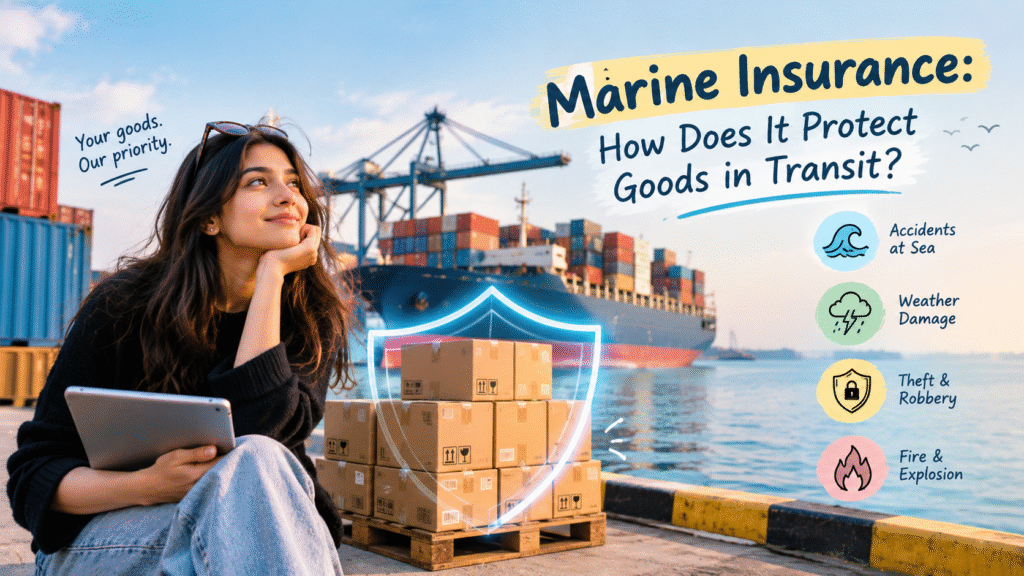
Moving goods from one place to another is a normal part of business—but transportation always comes with uncertainty. Goods can be damaged by accidents, theft, fire, rough handling, weather conditions, or other unexpected events. Marine insurance helps businesses manage these risks by providing financial protection for goods while they are being transported.
Whether you are importing raw materials, exporting finished products, or regularly moving goods across India, understanding how marine insurance works can help you protect your business from potentially expensive losses.
What Is Marine Insurance?
Marine insurance is a type of insurance designed to protect goods, cargo, and other financial interests against specified risks during transportation. Despite its name, it is not limited to goods travelling by sea.
Depending on the policy, marine cargo insurance can cover goods transported by:
- Ships and other vessels
- Road transport
- Railways
- Air freight
- Multimodal transportation involving more than one mode
For businesses, this can be particularly useful when goods are moving between warehouses, suppliers, distributors, ports, or customers.
The exact coverage depends on the policy terms, conditions, exclusions, and type of cargo being transported.
How Does Marine Insurance Protect Goods in Transit?
The basic idea behind marine insurance is simple: if insured goods suffer a covered loss or damage during transit, the insurer may compensate the policyholder according to the terms of the policy.
For example, imagine a business sending electronic equipment worth ₹15 lakh from Delhi to Mumbai. During transportation, an accident damages a portion of the shipment. Without appropriate insurance, the business may have to absorb the financial loss or attempt to recover the amount from the transporter, depending on the circumstances.
With an appropriate marine cargo policy, the business can potentially recover the insured loss, subject to the policy’s coverage and conditions.
This makes insurance an important part of managing transportation-related financial risks.
What Risks Can Marine Insurance Cover?
Coverage varies between policies, but marine cargo insurance may protect against certain risks such as:
- Accidental damage during transit
- Fire or explosion
- Theft, depending on the policy
- Vehicle or transport accidents
- Natural perils covered under the policy
- Damage during loading or unloading, where covered
- Certain losses arising from transportation-related incidents
Not every risk is automatically covered. Businesses should carefully check the policy wording before assuming that a particular event is insured.
Types of Marine Insurance for Goods in Transit
Businesses have different transportation needs, so marine insurance can be structured in different ways.
Marine Cargo Insurance
Marine cargo insurance primarily protects the goods being transported. It can be useful for manufacturers, traders, exporters, importers, wholesalers, and other businesses that regularly move merchandise.
The policy can be designed according to the nature of the goods, transportation route, mode of transport, and other relevant risk factors.
Specific Voyage Policy
A specific voyage policy generally covers goods for a particular journey.
For instance, if a company is shipping a particular consignment from India to another country, it may purchase coverage specifically for that transit.
This type of arrangement can be suitable for businesses with occasional shipments.
Open Policy
Businesses that transport goods frequently may consider an open policy arrangement, subject to insurer terms.
Instead of arranging separate insurance for every shipment, the policy can provide ongoing coverage for eligible consignments during the policy period.
This can make insurance administration more convenient for businesses with regular transportation requirements.
Multimodal Transit Coverage
Modern supply chains rarely depend on just one form of transport. A shipment could travel by road, rail, sea, and road again before reaching its final destination.
A suitable marine cargo insurance arrangement can provide protection across multiple stages of transportation, depending on the policy.
Why Is Marine Insurance Important for Businesses?
Transportation losses can affect more than the value of the damaged goods. A major shipment loss can disrupt cash flow, delay customer deliveries, increase replacement costs, and affect business relationships.
Marine insurance can help businesses transfer certain transportation risks to an insurer rather than carrying the entire financial burden themselves.
Here are some key reasons businesses consider it:
Protection Against Unexpected Financial Loss
A large shipment can represent significant working capital. Damage to or loss of that shipment can create an immediate financial impact.
Insurance can provide financial protection for covered losses, helping reduce the potential strain on business finances.
Support for Supply Chain Risk Management
Supply chains involve suppliers, warehouses, transporters, distributors, and customers. A problem at any stage can create a domino effect.
Cargo insurance can form one part of a broader risk-management strategy.
Protection During Domestic and International Transit
Goods may face risks whether they are travelling within India or across international borders. Appropriate coverage can help businesses manage transit risks based on their shipping arrangements.
Greater Confidence When Shipping Valuable Goods
Knowing that eligible goods are insured can give businesses greater confidence when moving valuable inventory or equipment.
What Does Marine Insurance Usually Not Cover?
One of the biggest mistakes businesses can make is assuming that every type of transit loss is automatically covered.
Policies commonly contain exclusions. Depending on the policy, these may relate to:
- Normal wear and tear
- Improper or inadequate packaging
- Certain delays
- Intentional or fraudulent acts
- Certain inherent defects in the goods
- Unauthorised transportation or route deviations
- Losses specifically excluded under the policy
The exact exclusions vary. Therefore, businesses should read the policy wording rather than relying only on a general understanding of marine insurance.
How to Choose the Right Marine Insurance Coverage
Choosing a policy should not simply be about finding the cheapest premium. The coverage should match the actual transportation risks faced by the business.
Consider the Nature of Your Goods
Fragile electronics, machinery, food products, textiles, chemicals, and other goods can have very different risk profiles.
The insurer may need information about the type, value, packaging, and handling requirements of the cargo.
Understand Your Transportation Route
Consider where the goods are travelling and how they are being transported.
A shipment travelling by road across several states may face different risks from an international shipment involving sea freight and multiple ports.
Check the Sum Insured
The sum insured should appropriately reflect the value of the goods and the basis of valuation specified under the policy.
Underinsurance can leave a business financially exposed even when it has an active policy.
Review Deductibles and Exclusions
Look beyond the premium. Check deductibles, exclusions, claim conditions, documentation requirements, and other policy terms.
A slightly lower premium may not necessarily provide the coverage your business actually needs.
What Should You Do If Goods Are Damaged During Transit?
If an insured shipment is damaged or lost, prompt action is important.
A business should generally:
- Inform the insurer as soon as possible.
- Notify the transporter or carrier where appropriate.
- Preserve damaged goods and packaging when required for inspection.
- Document the damage with photographs and relevant records.
- Keep invoices, transport documents, packing lists, and other supporting paperwork.
- Follow the insurer’s claim process and provide requested documents.
- Avoid disposing of damaged goods before receiving appropriate instructions, where inspection may be required.
The exact claim procedure depends on the insurer and policy terms.
Marine Insurance vs Transporter’s Liability
It is also important to understand the difference between cargo insurance and a transporter’s liability.
A transporter may have certain contractual or legal responsibilities for goods in its custody. However, that does not necessarily mean the business will recover the entire value of every damaged or lost shipment.
Marine cargo insurance focuses on protecting the insured interest in the goods, subject to the policy.
For businesses shipping high-value goods, relying solely on a transporter’s liability may therefore leave potential gaps in financial protection.
Who Should Consider Marine Insurance?
Marine insurance can be relevant for a wide range of businesses, including:
- Manufacturers
- Importers and exporters
- Wholesalers
- Retailers
- E-commerce businesses
- Distributors
- Traders
- Businesses transporting machinery or equipment
- Companies with regular intercity shipments
The need and appropriate coverage depend on the nature and frequency of transportation, value of goods, routes, and risk exposure.
Final Thoughts
Goods in transit are exposed to risks that businesses cannot always control. A road accident, theft, fire, handling incident, or other covered event can turn a routine shipment into a significant financial loss.
Marine insurance provides a way for businesses to manage eligible transit-related risks and protect the financial value of their cargo. However, the right policy depends on the goods, route, transportation method, valuation, exclusions, and business requirements.
Before purchasing coverage, compare the policy terms carefully and consider taking professional guidance to understand what is—and is not—covered. A well-structured transit insurance plan can become an important part of a business’s overall risk-management strategy.