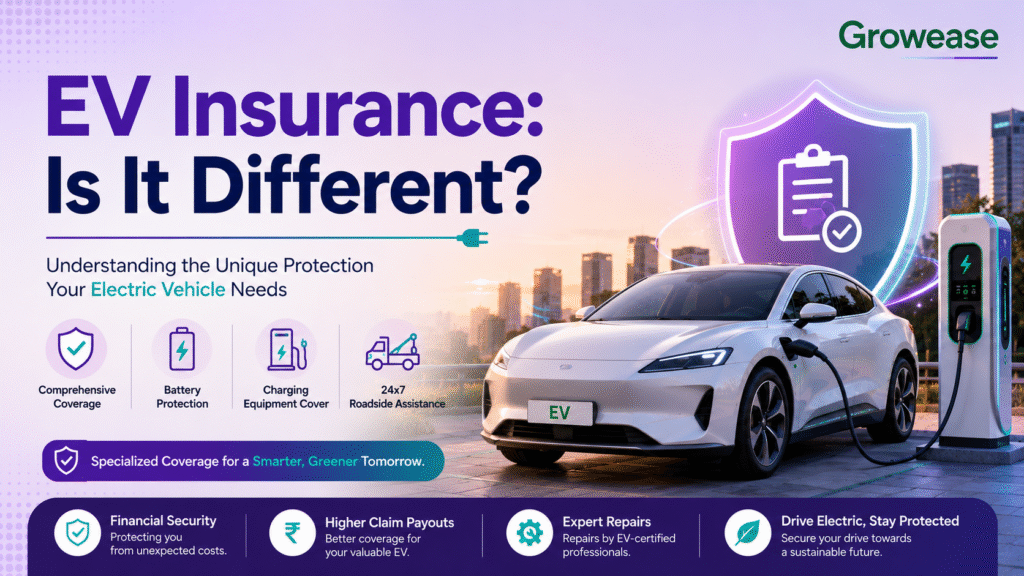
Electric vehicles (EVs) are no longer a niche choice in India. With rising fuel prices, government incentives, and growing environmental awareness, more people are switching to electric cars and two-wheelers. As EV ownership grows, many buyers have one important question: EV Insurance—is it really different from regular car insurance?
The short answer is yes. While the basic purpose of motor insurance remains the same, electric vehicles have unique components, repair requirements, and risks that make their insurance slightly different. Understanding these differences can help you choose the right policy, avoid unexpected expenses, and ensure complete financial protection.
In this guide, we’ll explain how insurance for electric vehicles works, what it covers, how premiums are calculated, and what factors you should consider before purchasing a policy.
Why Electric Vehicles Need Specialized Protection
An electric vehicle may look similar to a petrol or diesel car, but its internal technology is completely different. Instead of an internal combustion engine, EVs rely on high-capacity batteries, electric motors, advanced software, and charging systems.
These components are significantly more expensive than traditional vehicle parts. A damaged battery, for example, can account for a substantial portion of the vehicle’s overall value. Because of these unique features, insurers evaluate electric vehicles differently when determining coverage and premiums.
The goal is still the same—to protect the owner against financial losses caused by accidents, theft, natural disasters, or third-party liabilities—but the coverage often includes additional considerations specific to electric vehicles.
EV Insurance vs Regular Car Insurance
One of the most common misconceptions is that electric vehicles require an entirely different type of policy. In reality, the structure is quite similar.
A comprehensive policy generally includes:
- Third-party liability coverage
- Own damage protection
- Personal accident cover
- Protection against theft
- Coverage for natural and man-made disasters
However, insurers also recognize the unique risks associated with electric vehicles. This means the policy may include optional benefits designed specifically for EV owners.
Some of these include:
- Battery protection
- Charging equipment coverage
- Roadside assistance
- Protection against electrical failures
- Coverage for charging-related damage
These additional features make the policy more suitable for modern electric vehicles.
What Does EV Insurance Cover?
A comprehensive policy generally protects your vehicle against various risks.
Accident Damage
If your electric vehicle is damaged in an accident, the insurer pays for repairs or replacement of covered components according to policy terms.
Theft
Electric vehicles are valuable assets. Insurance provides financial compensation if the vehicle is stolen and not recovered.
Natural Calamities
Floods, storms, earthquakes, landslides, and cyclones can severely damage vehicles. Comprehensive insurance protects against such unforeseen events.
Fire Damage
Coverage usually includes damage caused by fire, explosions, lightning, or self-ignition.
Third-Party Liability
Indian law requires every vehicle owner to have third-party insurance. It covers legal liabilities arising from injury, death, or property damage caused to others.
Battery Protection: One of the Biggest Differences
The battery is often the most expensive component of an electric vehicle.
While a standard comprehensive policy may cover battery damage resulting from an insured accident, many insurers now offer dedicated battery protection add-ons.
These add-ons may protect against:
- Water ingress
- Short circuits
- Battery replacement after accidental damage
- Electrical failures
- Damage during charging
Since battery replacement can cost several lakhs of rupees, this add-on is worth considering for most EV owners.
Charging Equipment Coverage
Unlike conventional vehicles, electric vehicles depend on charging infrastructure.
Many owners install home charging stations or portable charging equipment. Damage to these systems may not always be covered under a standard policy.
Some insurers offer optional protection for:
- Home charging units
- Charging cables
- Portable chargers
- Electrical accessories
If you’ve invested in charging infrastructure, ask your insurer whether these items are covered.
Factors That Affect Insurance Premiums
Several factors influence how much you pay for insurance.
Vehicle Value
Higher-value electric vehicles generally attract higher premiums.
Battery Cost
Since batteries are expensive, insurers consider replacement costs while calculating premiums.
Repair Expenses
EV repairs often require trained technicians and specialized service centers, increasing repair costs.
Location
Vehicles driven in areas with higher accident rates or theft risks may have higher premiums.
Driving History
A clean driving record and claim-free history can reduce premium costs through No Claim Bonus (NCB).
Coverage Selected
Choosing comprehensive protection with multiple add-ons increases premiums but also provides better financial security.
Useful Add-ons for Electric Vehicle Owners
Not every add-on is necessary, but some provide significant value.
Zero Depreciation Cover
This ensures you receive a higher claim settlement without depreciation deductions on certain replaced parts.
Roadside Assistance
Running out of battery or facing a breakdown can happen unexpectedly. Roadside assistance provides towing and emergency support.
Return to Invoice Cover
If the vehicle is declared a total loss or stolen, this add-on helps recover the original invoice value instead of the depreciated value.
Consumables Cover
This includes expenses for items such as lubricants, nuts, bolts, brake oil, and other consumables that may not be covered under standard policies.
Engine and Electrical Protection
Although EVs don’t have conventional engines, protection for electrical systems and electronic components can be valuable.
Tips for Choosing the Right EV Insurance Policy
Selecting the right policy isn’t only about finding the cheapest premium.
Consider the following before making a decision:
- Compare multiple insurers.
- Check battery protection options.
- Review claim settlement ratios.
- Understand policy exclusions.
- Verify the availability of authorized EV repair garages.
- Read customer reviews.
- Choose only the add-ons you genuinely need.
A slightly higher premium may save you significant repair expenses later.
Common Myths About Electric Vehicle Insurance
Myth 1: EV Insurance Is Extremely Expensive
Not necessarily.
Although repair costs may be higher, insurers also offer competitive pricing as electric vehicle adoption increases.
Myth 2: Batteries Are Never Covered
False.
Battery coverage depends on the policy and add-ons selected.
Myth 3: Third-Party Insurance Is Enough
Third-party insurance only protects against liabilities involving others.
It does not cover damage to your own vehicle, theft, floods, or fire.
Myth 4: All Policies Offer the Same Benefits
Every insurer offers different coverage options, exclusions, and add-ons.
Comparing policies before purchasing is always recommended.
Why Comparing Policies Matters
Choosing insurance based solely on price can be costly.
Instead, compare:
- Coverage benefits
- Battery protection
- Charging equipment cover
- Claim process
- Cashless garage network
- Customer support
- Additional services
A policy with broader protection often provides better long-term value than the cheapest available option.
The Future of Electric Vehicle Insurance in India
India’s electric mobility ecosystem is expanding rapidly.
As more manufacturers introduce electric vehicles and charging infrastructure continues to improve, insurers are developing more customized products.
Future policies are expected to include:
- Connected vehicle benefits
- Usage-based insurance
- AI-powered claim processing
- Smart telematics pricing
- Enhanced battery health monitoring
These innovations will make insurance more personalized, efficient, and customer-friendly.
Conclusion
Electric vehicles represent the future of mobility, but they also require thoughtful financial protection. While the fundamentals of motor insurance remain unchanged, EV owners should pay close attention to battery coverage, charging equipment, repair costs, and specialized add-ons.
By comparing policies carefully and understanding what is included, you can make an informed decision that protects both your vehicle and your finances.
At Growease Insurance Brokers Private Limited, we help individuals and families compare insurance solutions from leading insurers so they can choose coverage that matches their needs and budget. Whether you’re buying your first electric vehicle or upgrading to a new EV, expert guidance can help you stay protected with confidence.