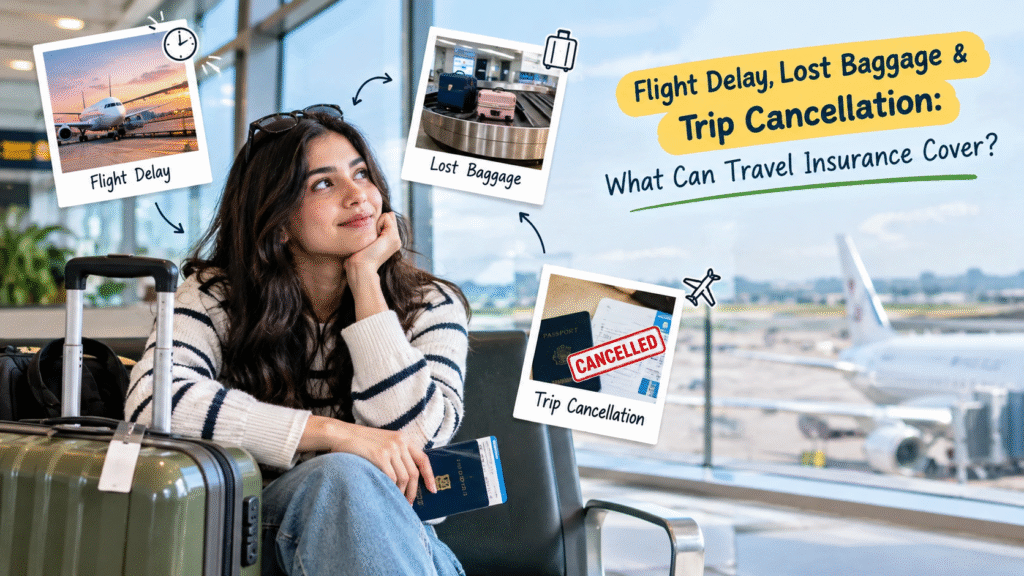
Travel plans can be exciting, but unexpected problems like flight delays, lost baggage, and trip cancellations can quickly turn a dream trip into a stressful experience. This is where travel insurance can provide financial protection against certain travel-related disruptions. Depending on the policy, travel insurance can cover expenses arising from covered delays, baggage loss, trip cancellation, medical emergencies, and other unexpected situations. Understanding what is actually covered—and what is excluded—can help you choose a policy that suits your journey.
What Can Travel Insurance Cover During a Trip?
Travel insurance is designed to protect you from specific financial losses and emergencies that may occur while travelling. The exact coverage depends on the insurer, policy type, destination, and terms and conditions.
Common benefits may include:
- Trip cancellation or interruption
- Flight delay
- Lost, stolen, or delayed baggage
- Emergency medical treatment
- Hospitalisation during the trip
- Passport loss
- Missed connections
- Personal accident cover
- Emergency evacuation or repatriation
- Travel assistance services
Not every policy includes all these benefits automatically. Some may be available only as optional add-ons or subject to specific limits.
Flight Delay: What Can Travel Insurance Cover?
Imagine reaching the airport on time, clearing security, and settling at your gate—only to receive a notification saying your flight has been delayed by several hours. Apart from frustration, a long delay can mean additional food, accommodation, or transportation expenses.
Depending on the policy, travel insurance may provide a flight delay benefit when the delay crosses the minimum duration specified in the policy.
For example, a policy might provide a fixed amount after the insured flight is delayed beyond a specified number of hours. The benefit is generally subject to the policy’s terms, conditions, and maximum limit.
What Expenses Can Flight Delay Cover Include?
Depending on the policy, benefits may include:
- Compensation for qualifying delays
- Meals or refreshments in certain situations
- Accommodation if an overnight delay is covered
- Additional transportation expenses under specified conditions
However, simply experiencing a delay does not automatically mean every expense will be reimbursed. The reason for the delay, minimum qualifying period, documentation, and policy limits can all matter.
What Should You Do If Your Flight Is Delayed?
Keep your travel documents and evidence of the delay. Depending on your insurer, you may need documents such as:
- Flight ticket or boarding pass
- Airline delay confirmation
- Original receipts for eligible expenses
- Policy documents
- Claim form
Having these documents ready can make the claim process easier.
Lost Baggage: What Can Travel Insurance Cover?
Few things are more frustrating than waiting at the baggage carousel while everyone else’s luggage arrives—except discovering that your suitcase isn’t coming.
Travel insurance may provide protection for checked baggage that is lost, stolen, or damaged, depending on the policy. The insurer may compensate the policyholder up to the specified limit after considering the applicable terms and conditions.
Some policies may also provide a separate benefit when baggage is delayed for a specified period.
Lost vs Delayed Baggage: What’s the Difference?
These two situations are often confused.
Delayed baggage: Your luggage hasn’t arrived when you do, but the airline may deliver it later.
Lost baggage: The baggage is considered lost according to the airline’s procedures and the applicable policy conditions.
For delayed baggage, some policies may reimburse reasonable expenses for essential items such as clothing and toiletries, subject to a defined limit.
For permanently lost baggage, compensation may be available according to the policy’s baggage-loss benefit.
What If Your Baggage Is Stolen?
If your baggage is stolen during a trip, coverage may be available under certain circumstances. You may need to report the incident to the relevant authorities and obtain documentation.
The policy may also exclude certain valuable items or impose special conditions on electronics, jewellery, cash, or important documents. That’s why checking the exclusions and sub-limits before travelling is important.
Trip Cancellation: What Can Travel Insurance Cover?
You book flights, accommodation, activities, and perhaps even a non-refundable holiday package months in advance. Then something unexpected happens, and you can no longer travel.
This is where trip cancellation coverage can become relevant.
Depending on the policy, you may receive reimbursement for eligible prepaid, non-refundable travel expenses if the cancellation happens because of a covered reason.
Covered reasons can vary significantly between policies. They may include certain medical emergencies, serious accidents, or other specified unforeseen events.
When Can Trip Cancellation Coverage Apply?
A policy may cover cancellation when the reason falls within the defined circumstances. For example, depending on the plan, situations could include:
- Serious illness or injury
- Hospitalisation
- Death of a close family member
- Certain unforeseen emergencies
- Other specifically listed events
The important point is that any cancellation is not necessarily covered.
If you simply change your mind, cancel because the destination no longer interests you, or cannot travel for a reason not listed in the policy, the claim may not be payable.
Trip Interruption Is Different From Trip Cancellation
Trip cancellation and trip interruption sound similar, but they generally apply at different stages.
Trip cancellation usually relates to cancelling your journey before departure because of a covered event.
Trip interruption generally applies after your journey has already started and you need to cut it short because of a covered situation.
For example, suppose you are enjoying a week-long holiday but receive news of a serious family emergency requiring you to return home. Depending on the policy, eligible additional travel expenses or unused prepaid costs may be covered.
Always check the exact wording because the definition and scope of interruption benefits can differ between insurers.
Travel Insurance Can Cover More Than Flight Problems
Flight delays and baggage issues often get the most attention, but travel insurance can also provide protection against other unexpected situations.
Emergency Medical Expenses
Medical treatment abroad can be expensive, particularly in countries where healthcare costs are significantly higher than in India. Many travel insurance policies provide coverage for eligible emergency medical expenses incurred during the trip.
Depending on the policy, this may include hospitalisation, emergency treatment, and other specified medical expenses.
Emergency Evacuation and Repatriation
Certain serious medical situations may require transportation to an appropriate medical facility or, in some circumstances, repatriation to India.
Some travel insurance policies provide benefits for eligible emergency evacuation or repatriation expenses, subject to the policy conditions.
Passport Loss
Losing your passport in another country can create both stress and additional expenses. Some travel insurance policies provide assistance or reimbursement for eligible expenses related to obtaining a replacement passport.
Missed Connections
A delayed flight can sometimes cause you to miss a connecting flight. Certain policies may provide benefits for missed connections when the circumstances meet the policy’s specified conditions.
What Does Travel Insurance Usually Not Cover?
Understanding exclusions is just as important as understanding benefits.
Depending on the policy, exclusions may include situations such as:
- Travelling despite known medical conditions without appropriate disclosure
- Losses caused by intoxication in circumstances excluded by the policy
- Unauthorised or illegal activities
- Certain pre-existing medical conditions
- Unattended baggage
- Loss of cash or valuables beyond specified limits
- Cancellation for reasons not listed as covered events
- Claims without required documentation
These exclusions vary between insurers and products, so don’t assume that every travel insurance policy provides identical protection.
How to Choose Travel Insurance for Your Trip
The cheapest policy may not necessarily provide the protection you actually need. Instead of looking only at the premium, consider the coverage in relation to your destination and travel plans.
Check These Features Before Buying
1. Medical coverage: Check the maximum sum insured and whether emergency evacuation is included.
2. Flight delay benefit: Look at the minimum delay required and the compensation available.
3. Baggage protection: Check the limits for lost, delayed, and damaged baggage.
4. Trip cancellation: Understand which cancellation reasons qualify and whether prepaid non-refundable expenses are covered.
5. Deductibles: Find out whether you need to pay a certain amount before the insurer pays the claim.
6. Exclusions: Read the exclusions carefully rather than relying only on the list of benefits.
7. Destination-specific requirements: Some countries may have particular insurance requirements for travellers.
Read the Fine Print Before You Travel
Travel insurance is not a guarantee that every unexpected expense will be paid. It is a financial protection product with defined coverage, limits, conditions, exclusions, and claim procedures.
Before purchasing, look at the policy wording instead of focusing only on the headline sum insured. A policy with a high overall coverage amount may still have relatively low sub-limits for baggage, delays, or specific expenses.
Also check whether you need to notify the insurer immediately after an incident and what documents are required for a claim.
A Small Premium Can Help You Prepare for Big Travel Disruptions
A delayed flight, missing suitcase, or cancelled trip may be outside your control—but the financial consequences don’t always have to catch you completely unprepared. The right travel insurance policy can help manage eligible expenses arising from covered travel disruptions and emergencies.
The key is to choose coverage based on your destination, trip duration, activities, health needs, and potential risks. Most importantly, understand the policy before you buy it—not when you’re already standing at the airport with a delayed flight notification on your phone.
For travellers, the goal isn’t simply to buy travel insurance. It’s to understand what your travel insurance can cover, what it cannot, and how to use the protection when you genuinely need it.