Renewing your car insurance can feel like one of those boring adulting tasks you keep postponing until the last minute. But car insurance renewal is more than just paying the premium and extending your policy for another year. It is a good opportunity to review your coverage, check whether your policy still fits your needs, and avoid surprises when you actually need to make a claim.
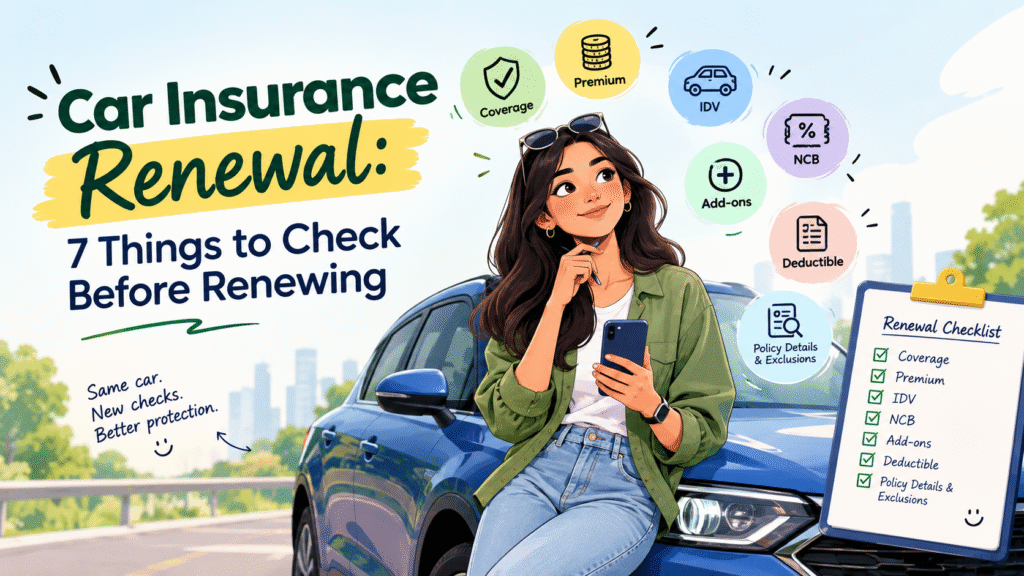
Your car, driving habits, add-on requirements and even your financial situation may change over time. So, before clicking “renew,” take a few minutes to review these seven important things.
1. Check Your Car Insurance Coverage Before Renewal
The first thing to review during car insurance renewal is your existing coverage. Don’t simply renew the same policy because you’ve been using it for years.
Depending on your needs, you may have:
- Third-party car insurance
- Comprehensive car insurance
- Own-damage cover
- Add-on covers
- Personal accident cover
Third-party insurance is legally required for vehicles in India, but it generally covers your legal liability toward third parties. It does not provide the same protection for damage to your own vehicle.
A comprehensive policy can provide broader protection by combining third-party liability with own-damage coverage, subject to the policy terms, conditions and exclusions.
Is Your Existing Car Insurance Still Enough?
Ask yourself a few simple questions:
- Has your car’s usage increased?
- Do you drive long distances more frequently?
- Has your car’s value or condition changed?
- Have you recently moved to an area with different traffic or weather risks?
- Did you purchase a new car or sell your old one?
Your answers can help determine whether your current coverage still makes sense.
2. Compare the Car Insurance Premium Before Renewing
Don’t assume that your current insurer automatically offers the best renewal price.
Before completing your car insurance renewal, compare the premium, coverage, deductibles and benefits offered by different insurers. A lower premium may look attractive, but it shouldn’t be the only factor you consider.
Two policies with similar-looking premiums may provide different coverage, exclusions, deductibles or add-ons.
Don’t Choose a Policy Only Because It Is Cheaper
A cheap policy isn’t necessarily the right policy if it leaves you with significant out-of-pocket expenses after an accident.
Instead, compare:
- Premium
- IDV
- Coverage
- Deductibles
- Add-ons
- Claim-related terms
- Network garages
- Policy exclusions
- Insurer’s service features
Think of it like buying a phone. You wouldn’t compare phones only on price while ignoring storage, camera and performance. Your insurance deserves the same attention.
3. Review Your Car’s IDV
IDV, or Insured Declared Value, is another important factor to check before renewing your policy.
In simple terms, IDV represents the approximate insured value of your vehicle, subject to the insurer’s policy terms and applicable depreciation. It can be relevant when your car is stolen or suffers damage that qualifies as a total loss.
As your car gets older, its value generally depreciates.
Why Should You Check IDV During Car Insurance Renewal?
Choosing an IDV that doesn’t appropriately reflect your vehicle can affect the financial protection available under certain claims.
Don’t automatically select the highest or lowest available IDV just because it looks better on the screen. Understand how the amount is determined and consider your car’s current market value and policy terms.
If you’re unsure, discuss the available options with your insurer or insurance advisor before renewing.
4. Check Your No Claim Bonus (NCB)
If you haven’t made a claim during the previous policy period, you may be eligible for a No Claim Bonus (NCB), subject to applicable terms.
NCB can help reduce the own-damage portion of your premium when you renew your policy.
Before renewing, check:
- Whether your NCB has been correctly mentioned
- Whether you are eligible for the applicable discount
- Whether your NCB details need to be verified
- What happens to your NCB if you switch insurers
What If You Change Your Insurer?
Changing insurers does not necessarily mean losing your accumulated NCB. However, you should provide the required documentation and information to establish your eligibility.
So, before completing your renewal, verify that your NCB is correctly reflected rather than discovering an issue later.
5. Recheck Your Car Insurance Add-Ons
Add-ons can enhance your car insurance coverage, but not every add-on is necessary for every driver.
Some commonly available add-ons may include:
- Zero depreciation cover
- Roadside assistance
- Engine protection
- Return to invoice
- Consumables cover
- Key replacement
- Tyre protection
The availability and terms of these covers can vary between insurers.
Which Add-Ons Should You Keep?
Think about your actual driving situation.
For example, if you frequently travel long distances, roadside assistance may be useful. If your car is relatively new, you may consider whether zero depreciation or other relevant add-ons suit your needs.
On the other hand, adding every available option can unnecessarily increase your premium.
The goal isn’t to collect add-ons. It’s to select coverage that addresses risks that are actually relevant to you.
6. Check the Deductible Before Car Insurance Renewal
A deductible is the amount you may need to pay yourself when settling an eligible claim, depending on the policy structure.
There are generally different types of deductibles associated with motor insurance, including compulsory deductible and, where applicable, voluntary deductible.
A voluntary deductible means agreeing to bear an additional portion of the claim amount yourself in exchange for a possible reduction in premium.
Should You Choose a Higher Deductible?
Not automatically.
A higher deductible may reduce your premium, but it also means potentially paying more from your own pocket when you make a claim.
Before car insurance renewal, consider whether the potential premium saving is worth the additional financial responsibility.
Always read the policy wording and understand exactly how deductibles apply to claims.
7. Verify Policy Details and Exclusions
This is probably the easiest step to skip — and one of the most important.
Before making the final payment, carefully check your policy details.
Look at:
- Name and contact details
- Vehicle registration number
- Engine and chassis number
- Policy period
- Coverage type
- IDV
- NCB
- Add-ons
- Deductibles
- Exclusions
Why Are Policy Exclusions Important?
Insurance doesn’t cover every possible situation. Policies contain specific exclusions and conditions that determine when a claim may or may not be payable.
For example, certain situations involving driving without a valid licence, intoxication, policy violations or other excluded circumstances may affect claim eligibility, depending on the policy terms and applicable law.
Understanding exclusions before an accident happens can prevent unpleasant surprises later.
When Should You Renew Your Car Insurance?
Don’t wait until the final day.
Ideally, start reviewing your policy before its expiry date. This gives you enough time to compare options, verify your NCB, reconsider add-ons and resolve documentation issues.
Driving without the required valid insurance can create legal and financial problems. A timely renewal helps you maintain continuous protection as required under your policy.
What Happens If You Forget Your Car Insurance Renewal?
If your policy expires and you don’t renew it on time, you may face a break in coverage. Depending on the circumstances and insurer’s rules, you may also need to complete an inspection before obtaining a new policy.
More importantly, if an accident occurs during a period when your own-damage cover is not active, you may have to bear the associated eligible expenses yourself.
That’s why setting a reminder a few weeks before expiry is a simple but useful financial habit.
Final Checklist Before Renewing Your Car Insurance
Before you click the payment button, quickly run through this checklist:
☑ Coverage still matches your needs
☑ Premium has been compared
☑ IDV has been reviewed
☑ NCB is correctly reflected
☑ Add-ons are actually useful
☑ Deductibles are understood
☑ Policy details and exclusions are checked
A few extra minutes today can help you make a more informed insurance decision for the year ahead.
Final Thoughts
Car insurance renewal shouldn’t be treated as a routine payment that you complete without checking the details. Your vehicle, usage, coverage requirements and financial priorities can change over time, so your policy deserves a quick review every year.
Instead of focusing only on the lowest premium, look at the bigger picture — coverage, IDV, NCB, deductibles, add-ons, exclusions and overall suitability.
At Growease, we help customers understand their insurance requirements and explore suitable financial protection options. If you’re approaching your policy expiry date, reviewing your car insurance today can help you enter the next policy year with greater clarity.