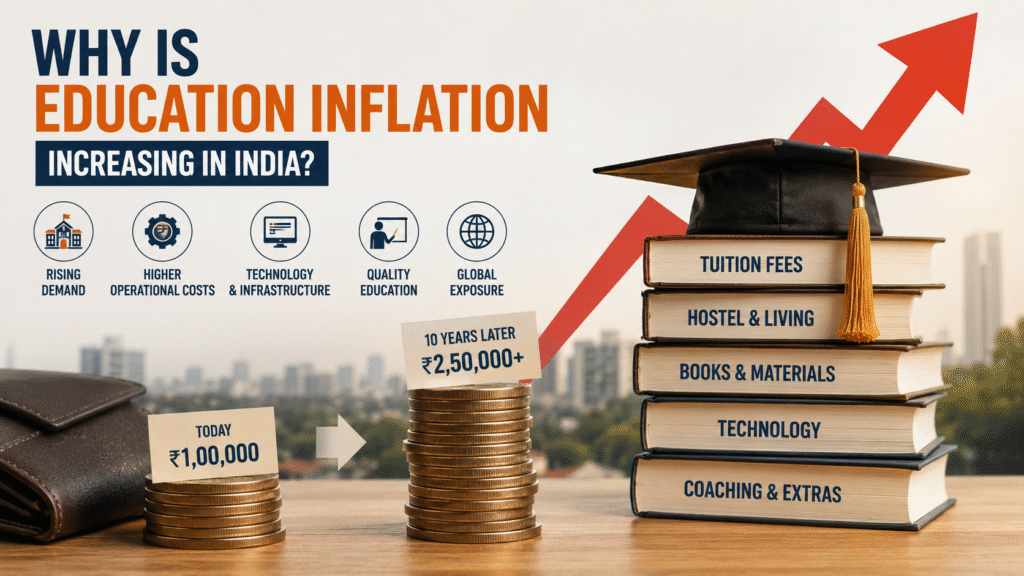
Education has always been considered one of the most valuable investments a family can make. However, over the past decade, the cost of quality education has increased significantly across India. Many parents who once believed they could comfortably fund their children’s education are now finding it increasingly difficult to keep up with rising fees. If you’ve ever wondered why is education inflation increasing in India, you’re not alone. Understanding the reasons behind this trend can help families prepare for future educational expenses and make informed financial decisions.
Education inflation refers to the steady rise in the cost of education over time. Unlike general inflation, which affects the prices of everyday goods and services, education inflation specifically impacts tuition fees, hostel charges, books, technology, transportation, coaching classes, and other educational expenses. In many cases, education costs have been rising faster than overall inflation, creating financial pressure on millions of Indian households.
What Is Education Inflation?
Education inflation is the annual increase in the overall cost of obtaining an education. It includes much more than just school or college tuition.
Some common expenses affected by education inflation include:
- School admission fees
- Annual tuition fees
- College and university fees
- Hostel and accommodation charges
- Books and study materials
- Digital learning subscriptions
- Coaching and competitive exam preparation
- Transportation
- Uniforms and educational supplies
As these expenses continue to rise year after year, parents must allocate a much larger portion of their income toward education than previous generations did.
Why Is Education Inflation Increasing in India?
Several economic, social, and technological factors contribute to the rising cost of education in India.
1. Rising Operational Costs for Educational Institutions
Schools and colleges face increasing expenses related to:
- Teacher salaries
- Campus maintenance
- Utility bills
- Security
- Infrastructure development
- Administrative costs
To maintain quality standards, institutions often pass these additional costs on to students through higher fees.
2. Growing Demand for Quality Education
Parents today are willing to invest more in education than ever before. They actively seek schools and universities offering:
- Better academic performance
- International curriculum
- Modern facilities
- Digital classrooms
- Strong placement opportunities
As demand for reputed institutions increases, many educational organizations raise their fees accordingly.
3. Technological Advancements
Technology has transformed education.
Many institutions now invest heavily in:
- Smart classrooms
- AI-powered learning platforms
- Online assessment tools
- Computer laboratories
- Digital libraries
- High-speed internet infrastructure
While these innovations improve learning experiences, they also increase operational expenses, contributing to education inflation.
Why Is Education Inflation Increasing in India for Higher Education?
Higher education has become significantly more expensive due to multiple reasons.
Increasing Infrastructure Investments
Universities continue expanding by adding:
- Advanced laboratories
- Research centers
- Innovation hubs
- Modern hostels
- Sports facilities
These developments improve educational quality but require substantial financial investment.
Rising Faculty Costs
Experienced professors, researchers, and industry experts command higher salaries. Institutions aiming to attract talented faculty often increase tuition fees to support these costs.
International Collaborations
Many Indian universities now partner with foreign institutions, introducing exchange programs, global certifications, and international curricula. While beneficial for students, these collaborations also increase educational expenses.
Private Education Is Expanding Rapidly
Private educational institutions have grown considerably over the past decade.
Unlike government-funded institutions, private schools and colleges depend primarily on tuition fees for revenue.
Their investments in:
- Better infrastructure
- Student support services
- Technology
- International exposure
- Industry partnerships
often result in higher annual fee revisions.
The Rising Cost of Professional Courses
Professional degrees generally experience higher education inflation than traditional academic programs.
Courses such as:
- Medicine
- Engineering
- Management
- Law
- Aviation
- Design
require expensive laboratories, specialized equipment, practical training, and experienced faculty members.
As a result, their overall costs continue increasing each year.
Education Inflation Beyond Tuition Fees
When discussing education inflation, many people only think about tuition fees.
In reality, several additional expenses contribute to the overall financial burden.
These include:
- Accommodation
- Transportation
- Food expenses
- Laptops and tablets
- Internet connectivity
- Coaching classes
- Examination fees
- Certification programs
- Educational tours
- Skill development courses
For many families, these hidden costs significantly increase the total expense of education.
Impact of Education Inflation on Indian Families
The increasing cost of education affects families in multiple ways.
Greater Financial Pressure
Parents often need to dedicate a larger percentage of their household income toward educational expenses.
Delayed Financial Goals
Many families postpone purchasing a home, planning retirement, or achieving other financial goals due to increasing education costs.
Increased Dependence on Borrowing
As educational expenses rise, more families consider borrowing to fund higher education, especially professional or international courses.
Changing Lifestyle Choices
Households may reduce discretionary spending on travel, entertainment, or luxury purchases to prioritize education expenses.
Education Inflation Compared to General Inflation
General inflation measures the increase in prices of goods and services across the economy.
Education inflation specifically measures rising educational costs.
Historically, education expenses have often increased at a faster pace than general inflation because educational institutions face sector-specific challenges such as infrastructure upgrades, technological investments, and increasing demand for quality education.
This means families planning for education cannot rely solely on average inflation rates when estimating future expenses.
Future Outlook for Education Inflation in India
Experts expect education costs to continue rising due to several ongoing trends.
These include:
- Growing urbanization
- Increased demand for private education
- Rapid technological adoption
- International collaborations
- Skill-based learning programs
- Expansion of specialized courses
- Rising operational expenses
As India’s education sector continues evolving, maintaining high-quality educational standards will likely require additional investments, which may further increase educational costs.
How Families Can Prepare for Rising Education Costs
Although education inflation cannot be controlled by individuals, families can prepare effectively.
Some practical steps include:
- Understanding the long-term cost of education.
- Reviewing expected education expenses regularly.
- Tracking annual fee increases.
- Planning well before major educational milestones.
- Staying informed about changes in educational trends.
- Considering both direct and indirect education expenses when budgeting.
Being proactive today can reduce financial stress in the future.
Conclusion
Understanding why is education inflation increasing in India is becoming increasingly important for every parent and student. Rising operational expenses, technological advancements, growing demand for quality education, expanding private institutions, and increasing infrastructure investments all contribute to higher educational costs.
Education remains one of the most valuable investments a family can make, but it also requires careful long-term planning. As education expenses continue to grow faster than many other household costs, staying informed about education inflation helps families make better financial decisions and prepare for future academic goals with greater confidence.
At Growease, we believe that informed financial planning begins with understanding the factors shaping future expenses. By recognizing the impact of education inflation today, families can take meaningful steps toward securing tomorrow’s educational aspirations.