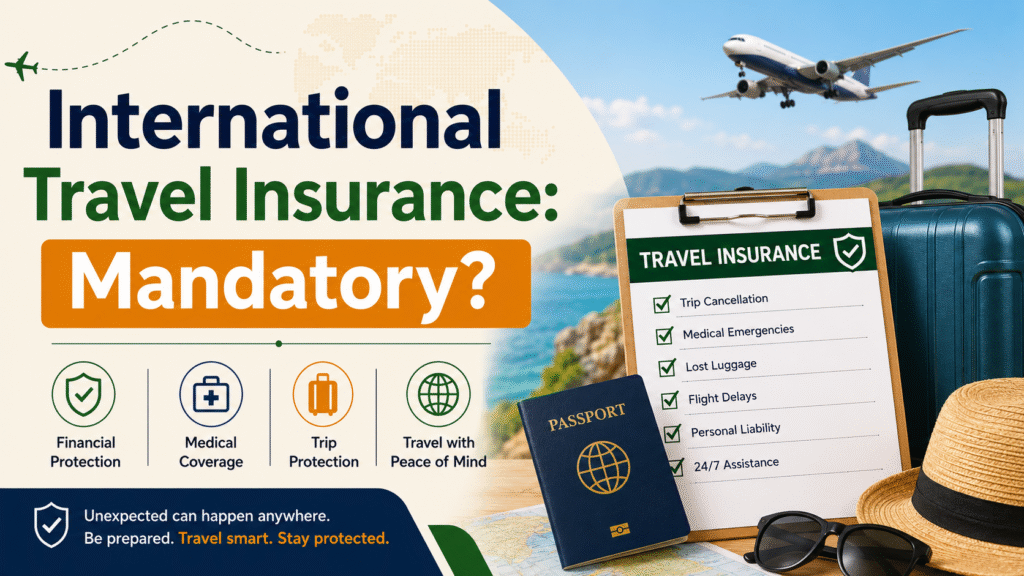
Planning an overseas vacation, business trip, or higher education journey is exciting. But amid booking flights, applying for visas, and planning itineraries, many travelers overlook one important question: International Travel Insurance: Mandatory? While it may not always be legally required for every destination, having travel insurance can protect you from unexpected financial losses and travel emergencies.
Whether you’re traveling for leisure, work, or studies, understanding the rules around international travel insurance can help you make informed decisions. In this guide, we’ll explain where travel insurance is mandatory, where it’s optional, why it’s worth buying, and how to choose the right policy.
Is International Travel Insurance: Mandatory?
The answer depends on where you’re traveling.
Some countries legally require visitors to have valid travel insurance before granting a visa or allowing entry. Others don’t make it compulsory, but strongly recommend it because of high medical expenses and travel-related risks.
Even when insurance isn’t mandatory, traveling without it can expose you to significant financial burdens if you experience medical emergencies, baggage loss, flight cancellations, or passport theft.
In simple words:
- Mandatory: Some countries require proof of travel insurance.
- Recommended: Most countries encourage travelers to have it.
- Essential: Every international traveler benefits from travel insurance, regardless of destination.
Why International Travel Insurance Matters
International travel comes with uncertainties. Even a well-planned trip can be disrupted due to unexpected events.
Travel insurance offers financial protection against:
- Medical emergencies abroad
- Hospitalization expenses
- Emergency evacuation
- Flight delays and cancellations
- Lost baggage
- Passport loss
- Personal liability
- Trip interruption
- Accidental death and disability
Instead of paying thousands of rupees—or even lakhs—out of pocket, your insurer can cover eligible expenses according to your policy.
Countries Where Travel Insurance Is Mandatory
Many destinations require travelers to purchase travel insurance before arrival.
Schengen Countries
If you’re applying for a Schengen Visa to visit Europe, travel insurance is mandatory.
The policy must generally include:
- Medical coverage of at least €30,000
- Emergency medical treatment
- Hospitalization
- Emergency medical evacuation
- Repatriation
Popular Schengen countries include:
- France
- Germany
- Italy
- Spain
- Netherlands
- Switzerland
- Belgium
- Austria
- Greece
Without valid insurance, your visa application may be rejected.
Cuba
Visitors are generally required to carry valid travel insurance covering medical emergencies.
Officials may ask for proof of insurance upon arrival.
United Arab Emirates (Depending on Visa Type)
Certain UAE visa categories may require travel insurance during the application process.
Requirements can vary depending on the visa type and issuing authority.
Other Countries
Insurance requirements may also apply for certain visas in countries such as:
- Turkey
- Russia
- Algeria
- Qatar (for selected categories)
- Thailand (during specific public health periods)
Rules may change over time, so travelers should always verify current visa requirements before departure.
Countries Where Travel Insurance Is Not Mandatory
Many popular destinations don’t legally require travel insurance.
Examples include:
- United States
- Canada
- Australia
- Singapore
- Japan
- United Kingdom
- New Zealand
However, this doesn’t mean you should travel without it.
Medical treatment in countries like the USA and Canada is among the most expensive in the world. Even a short hospital visit can cost several lakhs of rupees.
A travel insurance policy helps protect you against these unexpected expenses.
Why Buying Travel Insurance Is Still a Smart Decision
Medical Emergencies Can Be Extremely Expensive
Healthcare costs abroad are significantly higher than in India.
Imagine:
- Food poisoning
- Broken leg
- Heart emergency
- Sudden illness
- Accident
Without insurance, you’ll need to pay the hospital bills yourself.
With travel insurance, eligible medical expenses are covered according to your policy terms.
Flight Delays and Cancellations
Bad weather, technical issues, airline strikes, or operational disruptions can delay or cancel flights.
Travel insurance may reimburse eligible expenses such as:
- Hotel accommodation
- Meals
- Alternative transportation
- Additional travel costs
Lost or Delayed Baggage
Luggage doesn’t always arrive with you.
If your baggage is delayed or lost, travel insurance may compensate for:
- Essential clothing
- Toiletries
- Personal belongings
- Replacement expenses
Passport Loss
Losing your passport abroad can be stressful.
Many travel insurance policies provide assistance with:
- Passport replacement expenses
- Documentation support
- Emergency travel arrangements
Emergency Evacuation
Natural disasters, political unrest, or serious medical conditions may require emergency evacuation.
These costs can be enormous without insurance.
Travel insurance helps cover eligible evacuation expenses.
Who Should Definitely Buy International Travel Insurance?
Travel insurance is highly recommended for:
Tourists
Enjoy your vacation without worrying about unexpected emergencies.
Students
Students studying abroad often require long-term coverage for medical emergencies and travel-related issues.
Business Travelers
Business schedules are tight, and unexpected delays can be costly.
Travel insurance minimizes financial risks.
Senior Citizens
Older travelers are generally more vulnerable to health-related emergencies, making travel insurance especially valuable.
Families
Traveling with children means greater responsibility.
Insurance provides peace of mind during international family vacations.
What Does International Travel Insurance Cover?
Coverage varies by insurer and plan, but most comprehensive policies include:
Medical Coverage
- Hospitalization
- Doctor consultations
- Emergency treatment
- Surgery
- Medicines
Trip Cancellation
Reimbursement for eligible prepaid trip expenses if the journey is cancelled due to covered reasons.
Trip Interruption
Compensation for interrupted vacations due to emergencies.
Baggage Protection
Coverage for:
- Lost baggage
- Damaged baggage
- Delayed baggage
Personal Liability
Protection if you accidentally cause injury to another person or damage someone else’s property.
Emergency Assistance
Many insurers offer 24×7 emergency assistance services worldwide.
What Is Usually Not Covered?
Understanding exclusions is equally important.
Most travel insurance policies do not cover:
- Pre-existing medical conditions (unless specifically covered)
- Adventure sports without add-on coverage
- Self-inflicted injuries
- Alcohol or drug-related incidents
- Traveling against government advisories
- Illegal activities
- Cosmetic treatments
- Routine medical check-ups
Always read the policy wording carefully before purchasing.
How to Choose the Right International Travel Insurance Policy
Not every travel insurance plan is the same.
Consider these factors before buying:
Destination
Choose coverage suitable for the country you’re visiting.
Medical costs vary greatly between destinations.
Trip Duration
Buy a policy that covers your entire journey.
Frequent travelers may benefit from annual multi-trip plans.
Sum Insured
Select adequate coverage based on your destination.
Countries with higher healthcare costs generally require higher coverage amounts.
Medical Benefits
Ensure the policy includes:
- Emergency hospitalization
- Medical evacuation
- COVID-related coverage (if available)
- Repatriation
Baggage and Passport Cover
Choose plans offering sufficient baggage and document protection.
Claim Process
Look for insurers with:
- Cashless hospitalization
- Worldwide assistance
- Quick claim settlement
- 24×7 customer support
Common Myths About International Travel Insurance
Myth 1: I Am Healthy, So I Don’t Need Insurance
Accidents and illnesses can happen to anyone, regardless of age or fitness.
Myth 2: My Credit Card Covers Everything
Some premium credit cards offer limited travel insurance benefits, but coverage may not be sufficient for major medical emergencies or trip disruptions.
Myth 3: Travel Insurance Is Expensive
Compared to the overall cost of an international trip, travel insurance is relatively affordable and can save you from much larger unexpected expenses.
Myth 4: Claims Are Difficult
Many insurers now provide digital claim submission, cashless hospitalization, and dedicated support, making the claims process much easier than before.
Tips Before Purchasing Travel Insurance
Follow these simple tips:
- Compare multiple plans.
- Read inclusions and exclusions carefully.
- Check coverage limits.
- Verify visa requirements.
- Keep digital and printed policy copies.
- Save emergency assistance numbers.
- Buy insurance before your journey begins.
Final Thoughts
So, International Travel Insurance: Mandatory? The answer depends on your destination and visa requirements. Some countries make it compulsory, while others leave the decision to travelers. However, regardless of whether it’s legally required, travel insurance is one of the smartest investments you can make before an overseas trip.
Medical emergencies, flight disruptions, baggage loss, or passport theft can quickly turn an exciting journey into an expensive experience. A suitable travel insurance policy provides financial protection and peace of mind, allowing you to focus on enjoying your trip instead of worrying about unexpected setbacks.
At Growease, we help travelers choose travel insurance plans that match their destination, travel purpose, and budget. Whether you’re traveling for a vacation, business, education, or family visit, our experts can help you find reliable coverage so you can explore the world with confidence.